

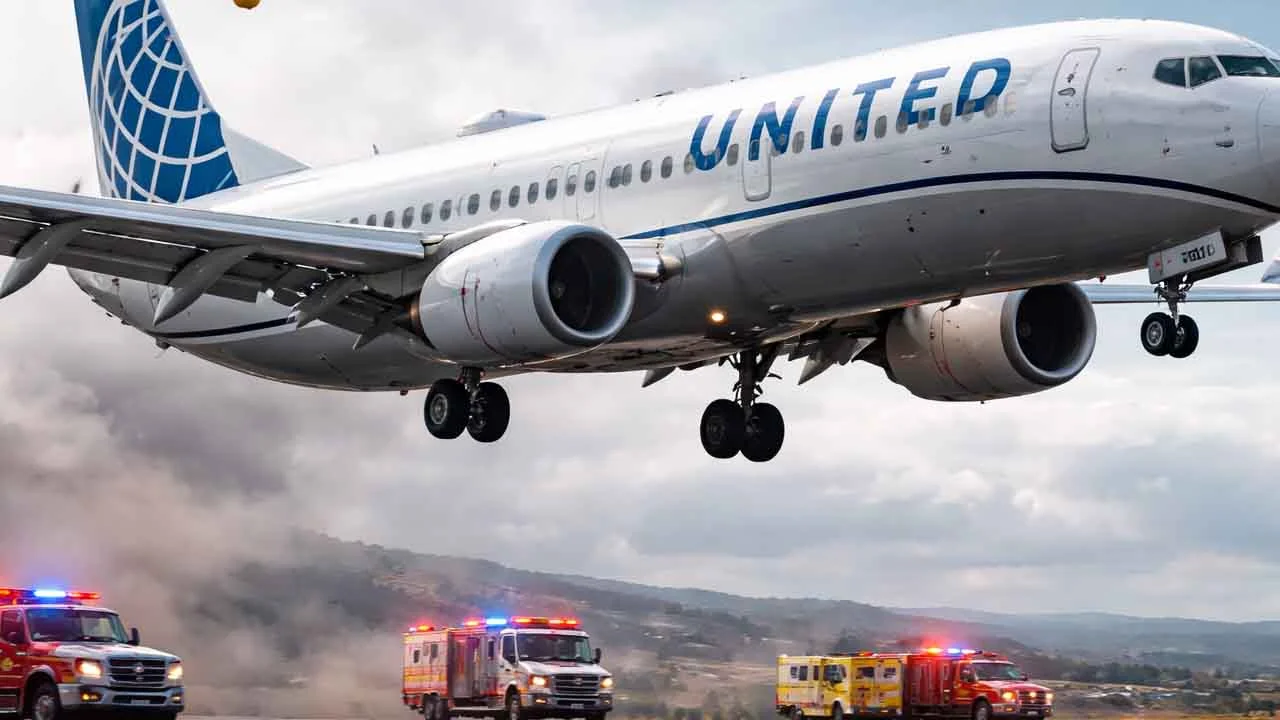
Air travel remains one of the safest modes of transportation in the modern world, but when something unexpected occurs mid-air, the response must be swift, decisive, and focused on passenger safety above all else. One notable example that captured international attention is the United Airlines Flight UA770 emergency diversion — an incident during a transatlantic flight in 2025 that showcased how established aviation protocols work in practice when faced with unexpected technical challenges. Although such diversions are statistically rare, they reveal the depth of preparation, coordination, and training required to keep millions of passengers safe each year.
In this comprehensive article, we will examine what exactly happened with United Airlines Flight UA770, explore why the emergency diversion occurred, discuss how pilots and air traffic control handled the situation, highlight the passenger experience, and explain what lessons this event offers for future aviation safety. By exploring these aspects, readers will gain a clearer understanding of why such diversions occur, what they mean for both passengers and airlines, and how modern aviation prioritizes safety above scheduling or convenience.
The Setting: A Routine Transatlantic Flight
United Airlines Flight UA770 Emergency Diversion was a scheduled long-haul service operating between Barcelona El Prat Airport in Spain and Chicago O’Hare International Airport in the United States. The flight was operated by a Boeing 787-9 Dreamliner, one of the most advanced long-range aircraft in service today. With approximately 257 passengers and 12 crew members on board, the aircraft departed normally and climbed to cruising altitude over European airspace. For most of the journey, everything appeared to be proceeding as planned.
However, around 90 minutes into the flight, during the cruise phase at approximately 37,000 feet, the flight crew became aware of a technical irregularity. Modern aircraft like the 787-9 continuously monitor hundreds of systems, including pressurization, engines, avionics, and environmental conditions. In this case, a cabin pressurization alert was triggered — not an immediate catastrophe, but a warning that a system controlling air pressure inside the cabin might not be functioning within normal parameters. Because proper pressurization is essential for passenger comfort and safety at high altitudes, the crew took this warning seriously.
To ensure that the aircraft remained within the safest possible environment, the pilots initiated standard emergency procedures. This process began with declaring a general emergency over the aircraft’s transponder and coordinating with air traffic control. This decision made it an official United Airlines Flight UA770 emergency diversion, signaling that the flight required priority routing and immediate attention from ground authorities, airport emergency services, and airline support teams. United Airlines Flight UA770 Emergency Diversion
Understanding the Emergency Diversion Decision
In aviation, the term emergency diversion refers to a situation in which a flight alters its intended route and lands at an alternate airport because continuing to the original destination may compromise safety. Diversions can occur for many reasons, including technical issues, medical emergencies, weather conditions, or unexpected safety concerns.
In the case of the United Airlines Flight UA770 emergency diversion, the cabin pressurization system alert was the primary catalyst. Even though there was no immediate loss of pressure or deployment of oxygen masks, the flight crew’s priority is always to take action when a system indicates a potential risk. The alert could have represented anything from a faulty sensor to a real mechanical problem, and because the crew cannot determine the exact cause while airborne, they elected to divert to an airport that could handle any eventuality.
The chosen diversion airport was London Heathrow, one of the world’s major international air hubs. Heathrow was selected because it has exceptional emergency response capabilities, robust maintenance facilities for large aircraft like the Dreamliner, and experienced ground crews prepared to assist with unexpected landings. This strategic selection reflects careful planning: choosing an alternate airport that can support both passenger needs and technical investigation is critical in emergency scenarios. United Airlines Flight UA770 Emergency Diversion
Thus, the United Airlines Flight UA770 emergency diversion was not a result of panic or confusion, but of carefully practiced aviation safety protocols — procedures refined over decades of global air travel operations.
How the Diversion Was Executed
Once the decision to divert was made, air traffic control coordinated the aircraft’s descent and rerouting to Heathrow. The pilots adjusted altitude and navigation, gaining clearance from controllers in various European airspaces. Declaring an emergency via the universal transponder emergency code ensured that the flight received priority handling and that emergency services were alerted at the landing airport.
Cabin crew members communicated with passengers during the descent, explaining that a precautionary diversion was underway for safety reasons. Reports from passengers indicate that the descent and landing were calm and controlled, with no indications of panic or disorder. The professionalism of the flight crew and clear communication helped maintain order on board — a testament to rigorous training programs.
Upon reaching London, the aircraft touched down safely. Emergency response teams, including fire, medical, and airport operations staff, were on standby as a precaution. The plane taxied to a designated gate where passengers disembarked and were later provided with assistance, including refreshments, hotel accommodations if needed, and rebooking options for onward travel.
Passenger Experience: Anxiety and Reassurance
For travelers on board, a mid-flight diversion can be unsettling. Many passengers reported experiencing moments of uncertainty, particularly when the aircraft began its descent earlier than expected. However, clear communication from the cockpit and the cabin crew’s composed demeanor played a significant role in calming concerns.
Passengers noted that the announcement from the captain explaining the situation — that safety was the priority and that the flight was making a precautionary landing — helped them feel informed rather than alarmed. Once safely on the ground, many expressed relief and appreciation for the smooth landing and professional handling. Although the diversion caused delays and disrupted travel plans, no injuries were reported.
Technical Review and Safety Follow-Up
After the safe landing, the aircraft was temporarily removed from service for detailed inspection. Engineers examined the pressurization system to determine whether the alert stemmed from a sensor malfunction or a mechanical issue. Even minor alerts are thoroughly investigated in commercial aviation to eliminate any potential hidden risks.
Initial evaluations indicated that a faulty sensor likely triggered the alert rather than a full system failure. Nevertheless, comprehensive testing and component checks were conducted before the aircraft was cleared to resume operations. This methodical follow-up underscores how seriously the industry treats any in-flight irregularity.
Why This Incident Matters
The United Airlines Flight UA770 emergency diversion highlights several critical truths about modern aviation. First, safety always overrides scheduling pressures. Second, standardized emergency procedures allow crews to act quickly and efficiently. Third, communication and preparedness significantly reduce passenger anxiety during unexpected events.
While diversions may appear dramatic, they are actually evidence of a well-functioning safety culture. Detecting a potential issue early and landing at a suitable airport demonstrates that systems, training, and coordination are working exactly as intended.
FAQs
Q1: What triggered the diversion?
A cabin pressurization system alert prompted precautionary action.
Q2: Where did the aircraft land?
The flight diverted safely to London Heathrow Airport.
Q3: Were passengers harmed?
No injuries were reported.
Q4: Is an emergency diversion common?
They are uncommon but planned for within aviation safety procedures.
Q5: Does this mean the aircraft was unsafe?
No. The diversion shows that safety systems detected a potential issue and addressed it proactively.